









HYPERVISOR 技术
在一个硬件平台上整合多个应用
QuickNav: Our offerings / Resources / Benefits / Basics






Introduction to workload consolidation
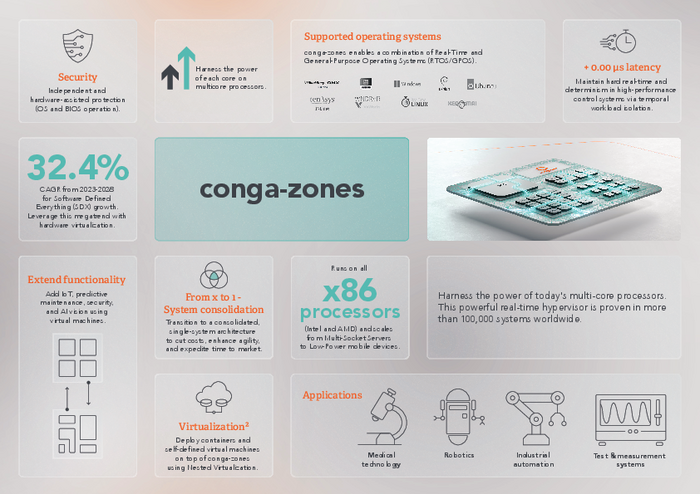
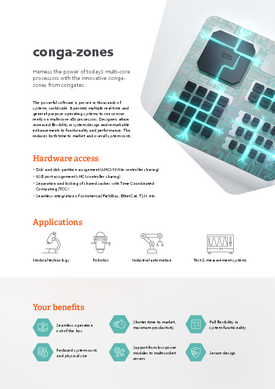
Leveraging multicore processors and virtualization, you can consolidate multiple tasks onto a single platform, where each task operates securely and independently from each other. This is an effective way to reduce costs and complexity in embedded applications.

优势一览






Hypervisor basics
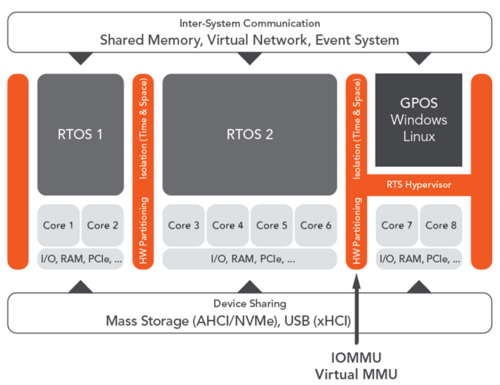
A hypervisor permits multiple operating systems to run concurrently on one multicore x86-based Computer-on-Module . The hypervisor partitions the available resources including CPU cores, graphics, memory, timers, and I/O devices like PCIe, USB, etc.
These resources are assigned as required to individual virtual machines (VMs). Each VM runs its own operating system. The VMs are completely isolated from each other, so one VM cannot compromise another.
Typical use cases of hypervisor technology
- Consolidating the workloads of previously separated systems on one single system to save hardware, cost, and energy.
- Separating monolithic software applications into function blocks and running them exclusively in their own OS but still on one system, and
- Protecting valuable IP by running critical code on one secured VM and using others for open world communication and end-customer applications.